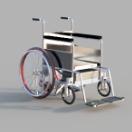
VOICE CONTROL WHEELCHAIR
Tagline: Revolutionizing mobility for the differently abled with voice commands. Description: Our project aims to develop a voice-controlled wheelchair that provides greater independence and mobility
Created on 25th February 2024
•
VOICE CONTROL WHEELCHAIR
Tagline: Revolutionizing mobility for the differently abled with voice commands. Description: Our project aims to develop a voice-controlled wheelchair that provides greater independence and mobility


The problem VOICE CONTROL WHEELCHAIR solves
The project aims to develop a voice-controlled wheelchair to address mobility challenges faced by people with disabilities, especially those with severe impairments affecting their movement. By enabling users to control the wheelchair through voice commands, the project aims to enhance their mobility and independence. This technology allows users to navigate their environment more easily, participate in activities, and access places that may have been difficult to reach with traditional manual wheelchairs.
Moreover, the voice-controlled wheelchair promotes accessibility by providing a user-friendly interface for people with disabilities. It reduces the reliance on caregivers, allowing users to control their movement independently. This not only enhances their sense of autonomy but also reduces the burden on caregivers, improving the overall quality of life for both parties.
Another key aspect of the project is its focus on affordability and accessibility. By making voice-controlled wheelchairs more affordable and available to a wider range of individuals with disabilities, the project aims to improve their overall well-being and integration into society. This technology has the potential to significantly impact the lives of people with disabilities, offering them greater freedom, mobility, and independence in their daily lives.
Challenges we ran into
Challenges I ran into:
One of the major challenges we faced during the project was ensuring the accuracy and reliability of the voice recognition system. We found that the system sometimes struggled to understand commands in noisy environments or when the user had a speech impairment. To overcome this, we had to fine-tune the voice recognition algorithms and optimize the system's sensitivity to different speech patterns and accents.
Another hurdle was integrating the voice control system with the wheelchair's hardware effectively. We encountered compatibility issues between the voice recognition module and the Arduino board, which required us to modify the code and hardware connections to ensure smooth communication.
Additionally, balancing the wheelchair's responsiveness and safety posed a significant challenge. We had to implement robust obstacle detection and avoidance mechanisms to prevent collisions while maintaining a user-friendly interface for controlling the wheelchair.
Overall, these challenges required careful planning, iterative testing, and continuous refinement of our design to overcome. Through perseverance and collaboration, we were able to address these hurdles and successfully develop a functional voice-controlled wheelchair prototype.
Technologies used