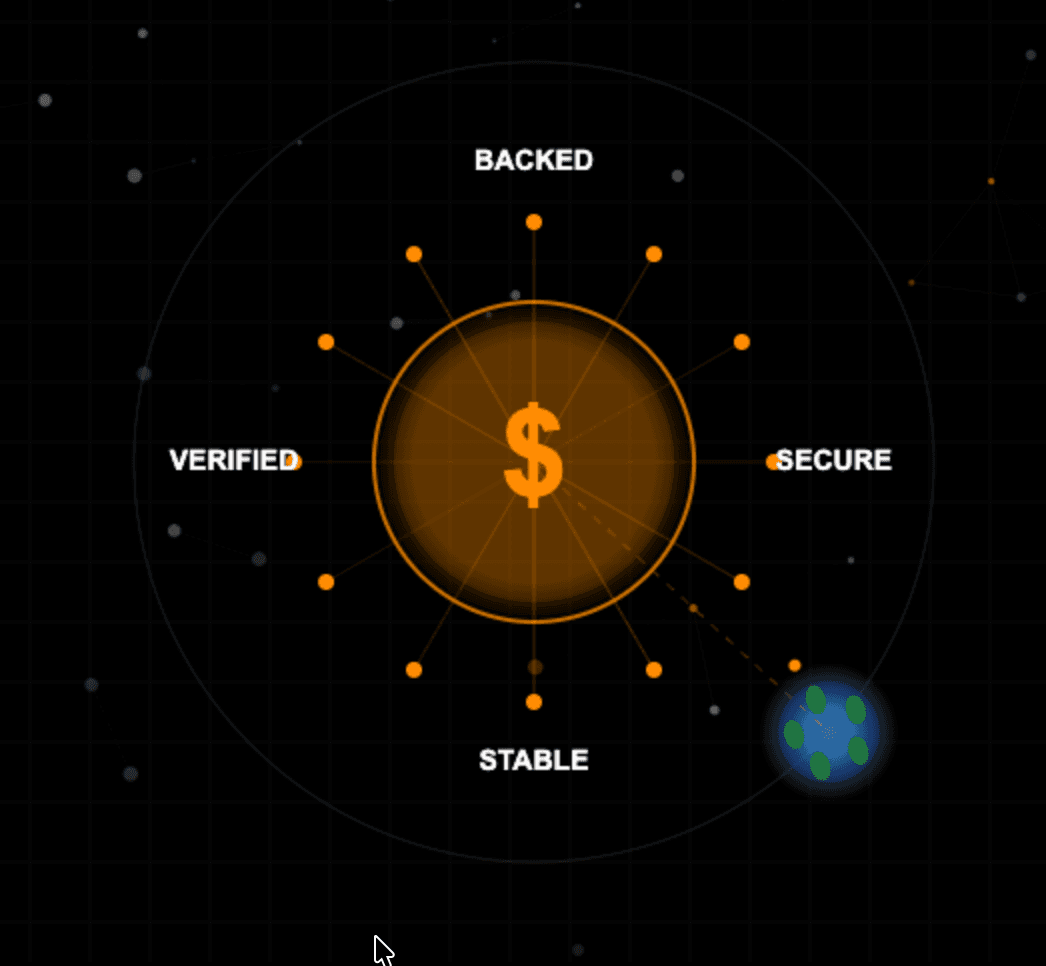
StableYield
Yield-optimized, secure stablecoin engine
Created on 9th November 2025
•
StableYield
Yield-optimized, secure stablecoin engine


The problem StableYield solves
In the current DeFi landscape, stablecoins form the backbone of liquidity, trading, and collateral. However, most stablecoin systems today are either opaque, yieldless, or overly reliant on governance discretion. Users are often forced to choose between transparency and returns — fully collateralized models like USDC are safe but yieldless, while yield-bearing stablecoins often introduce hidden risk, custodial exposure, or governance subjectivity.
Moreover, existing yield strategies rarely integrate risk accountability or automated enforcement. When strategies underperform, losses are socialized, and end-users pay the price. This creates a trust gap between protocols, restakers, and users — hindering institutional adoption and the broader mission of sustainable, transparent DeFi.
StableYield bridges this gap.
💡 What StableYield Enables
StableYield is a credibly-secure, fully collateralized stablecoin engine that introduces a yield-optional layer with automated risk enforcement — built for composable DeFi and public good yield strategies.
Here’s how it makes existing DeFi safer and more efficient:
- Secure, Transparent Stability
Every StableYield token is backed 1:1 by on-chain reserves (USDC, USDT, etc.).
Users can mint and redeem instantly with no custodial risk.
All reserves are verifiable — no hidden leverage or off-chain dependency.
- Yield with Accountability
Users can opt into yield-bearing vaults that deploy funds into whitelisted DeFi strategies (Aave, Morpho, RWA yield, MEV capture, etc.).
Restakers back each operator’s performance by posting collateral.
If an operator fails or deviates, smart contracts slash restaker collateral automatically — protecting users from losses.
- Trust-Minimized Risk Model
No DAO votes, no human judgment — just deterministic, rule-based enforcement.
Ensures objective protection for users and credible commitments from strategy operators.
- Composable Yield Donations (Octant v2 Integration)
Through Octant’s Yield Donating Strategy, StableYield can automatically route a share of realized yield to fund public goods, ecosystem growth, or governance-driven initiatives.
Example:
95% of yield → users
5% → on-chain public good or ecosystem grant
This makes StableYield a self-sustaining mechanism that grows both users and the ecosystem it supports.
- Building Safer DeFi Infrastructure
Protocols can integrate StableYield as a trust-minimized stable asset or yield primitive.
Institutions can use it as a transparent, auditable stablecoin with built-in yield logic.
Builders can plug into its modular components (minting, yield routing, slashing enforcement) to compose safer DeFi protocols.
Challenges I ran into
Building StableYield involved connecting multiple DeFi layers — stablecoin mechanics, yield vaults, and automated risk enforcement — all while keeping everything secure, composable, and deterministic. Along the way, I faced several key challenges:
- Automating the Slashing Logic
Creating a deterministic slashing mechanism that automatically penalizes underperforming operators without governance interference was a major hurdle.
Issue: On-chain performance verification is complex — comparing off-chain metrics or yield deltas can’t rely on oracles alone.
Solution: Introduced a reference yield baseline system: each strategy reports its yield periodically, and the contract compares it against an expected benchmark (from Aave or Morpho). Any deviation beyond a tolerance threshold triggers the slashing routine automatically.
- Maintaining Transparency Without Sacrificing Efficiency
On-chain audits of collateral and strategy performance were essential for transparency, but frequent state updates increased gas costs.
Issue: Gas overhead from continuous reserve audits.
Solution: Moved to a checkpoint-based auditing system, where state proofs are updated at fixed intervals and verified using Merkle snapshots — preserving transparency while reducing cost.
- Balancing Security and Modularity
Combining stablecoin minting, yield strategies, and slashing enforcement within one framework introduced architectural complexity.
Issue: Managing inter-contract dependencies without creating circular trust assumptions.
Solution: Designed the architecture in modular layers — Base Stablecoin Layer, Yield Layer, and Enforcement Layer — each independently verifiable and upgradable.
Tracks Applied (5)
Best use of a Yield Donating Strategy
Most creative use of Octant v2 for public goods
Best use of Morpho V2
Best public goods projects
Best use of Aave v3 (Aave Vaults)
Technologies used
Cheer Project
Cheering for a project means supporting a project you like with as little as 0.0025 ETH. Right now, you can Cheer using ETH on Arbitrum, Optimism and Base.