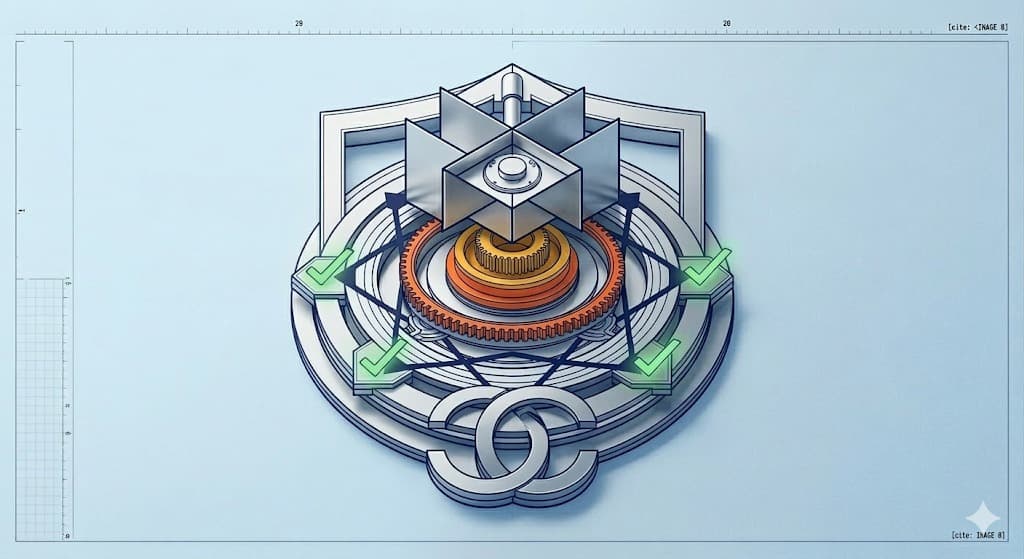
Shadowpool
Private DeFi infrastructure > generation of web3
Created on 14th March 2026
•
Shadowpool
Private DeFi infrastructure > generation of web3


The problem Shadowpool solves
Blockchain transactions on Ethereum are fully transparent. Every transaction publicly exposes the sender address, receiver address, and transaction amount. While this transparency improves trust and auditability, it also creates serious privacy issues. Anyone can analyze blockchain data to track financial activity, link wallets together, and monitor user behavior.
This project solves that problem by enabling private transactions using Zero-Knowledge Proofs (ZKPs). By using the Groth16 proving system and commitment-based deposits, the protocol breaks the link between deposits and withdrawals. Users can deposit funds into a pool and later withdraw them to a different address without revealing their identity.
As a result, observers cannot determine who sent funds to whom. This significantly improves financial privacy, protects user identities, and prevents transaction graph analysis on-chain. The system allows users to benefit from blockchain technology while maintaining control over their financial privacy.
Challenges we ran into
One of the main challenges during development was implementing and verifying Groth16 Zero-Knowledge proofs using Circom and SnarkJS.
While building the circuit, I encountered multiple issues such as circuit assertion failures, incorrect signal wiring, and proof verification mismatches between the generated proof and the on-chain verifier contract. These problems caused the proof verification step to fail during smart contract execution.
To solve this, I carefully debugged the circuit constraints, validated the input signals, and ensured that the public signals generated by the circuit matched the verifier inputs expected by the smart contract. After fixing the constraint logic and re-compiling the circuit, I successfully generated valid proofs and verified them on-chain.
This debugging process helped me better understand the interaction between Circom circuits, Groth16 proofs, and Solidity verifier contracts.
Tracks Applied (8)
Privacy
Best creative use of ENS

Ethereum Name Service
Pool prize
Ethereum Name Service
Best Privacy Application using BitGo

BitGo
Build What Big Tech Won't
Fileverse
DeFi 2.0 - New Primitives

Base
Privacy
Base
BEST Overall Project
Cheer Project
Cheering for a project means supporting a project you like with as little as 0.0025 ETH. Right now, you can Cheer using ETH on Arbitrum, Optimism and Base.