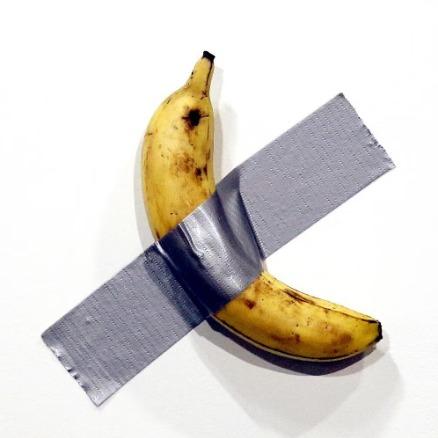
pArt
Fractionalized art ownership as a means of investing: art as in Picasso/Da Vinci, not NFTs.
Created on 11th February 2024
•
pArt
Fractionalized art ownership as a means of investing: art as in Picasso/Da Vinci, not NFTs.


The problem pArt solves
Diversification and appreciation are key considerations in investment, spanning various assets like stocks and real estate. Art, often overlooked due to high costs, presents significant potential. Over time, art has shown remarkable appreciation, sometimes outpacing the S&P 500. Notably, during events like the COVID-19 pandemic, while traditional markets faltered, the art market exhibited resilience and even appreciation. Art offers not only financial gains but also serves as a hedge against market volatility and economic uncertainties.
Our goal is to create a platform that lets individuals become partial owners of artwork, democratizing art investment. We achieve this by offering fractional shares in prestigious artworks, removing traditional barriers and making art investment accessible to a wider audience. This fosters inclusivity and expands opportunities for cultural appreciation and financial growth.
The platform will feature a curated selection of artworks for users to invest in, along with comprehensive historical auction pricing data and our own machine learning-driven valuations and market trend predictions. Using gradient boosting to estimate current valuation and NLP to gauge art sentiment and predict future market trends, the platform equips users with ample information to make informed investment decisions confidently.
Challenges we ran into
Private sale auctions have become the dominant practice in the art world, with major players like Christie’s, Sotheby’s, Phillips, Bonhams, and Heritage Auctions often keeping price information confidential. As a result, obtaining historical pricing data on artworks is challenging, with many datasets behind paywalls, limiting access for researchers.
Adding to the difficulty is the lack of comprehensive documentation for artworks, with many pieces poorly cataloged or entirely undocumented. This scarcity of information restricts the range of features available for analysis. Moreover, the qualitative nature of art complicates efforts to quantify its attributes for modeling purposes.
Due to the wide range of sentiment analysis and NLP Python open-source packages available, we initially opted for the TextBlob package due to its simplicity and our time constraints. However, we encountered two significant issues with this approach. Firstly, the program output provided discrete values of [1, 0, −1], leading to oversimplifications and lacking nuance for future predictions or current sentiment approximation. Secondly, TextBlob categorizes data into polarity and subjectivity, which we found inadequate for understanding market trends and sentiment accurately.
A significant hurdle lies in integrating Flask with Next.js, particularly due to the disparity in handling user data. While Flask traditionally employs HTML for user data, which lacks state management, Next.js relies heavily on state management. Bridging this gap requires thoughtful consideration and meticulous implementation to ensure seamless interaction between the two frameworks.
Another formidable challenge is the dynamic nature of part selection within images. As users engage with the platform, the allocation and selection of image parts become increasingly complex. The risk of multiple users attempting to select the same part simultaneously adds another layer of difficulty.
Tracks Applied (1)