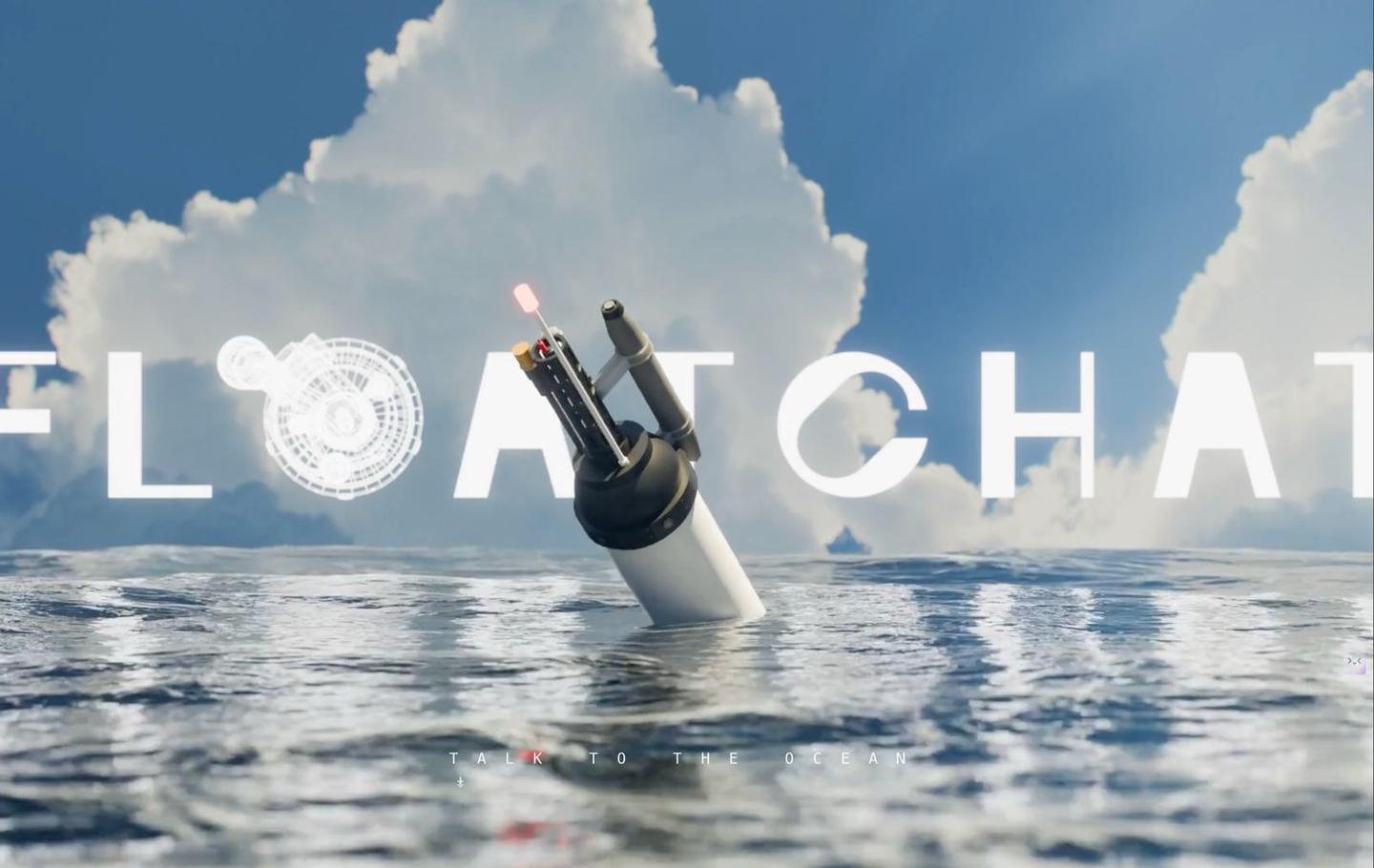
FloatChat
Ask. Visualize. Act.
Created on 9th October 2025
•
FloatChat
Ask. Visualize. Act.


Description of your solution
FloatChat — Ocean data, answered.
Problem. ARGO floats generate rich ocean data, but it lives in specialist NetCDF files with QC rules and jargon. Non-experts (and even busy experts) rely on screenshots or outdated charts—fueling mistakes and misinformation.
Our idea. FloatChat is an agentic AI dashboard that turns plain-English questions into validated, cited answers with maps, charts, and reproducible CSV/NetCDF exports. Every result shows what data, from where, and how fresh—so insight is fast and trustworthy.
What the user can do.
- “Show salinity profiles near the equator in March 2023.”
- “Nearest ARGO floats to Mumbai today.”
- “Compare temperature & salinity trends in the Arabian Sea over 6 months.”
- "One-click export to CSV/NetCDF; jump from chat to map and 3D globe."
How it works (agentic pipeline).
- Query Planner (LangGraph) clarifies variables, region, and time.
- Schema RAG maps intent to our SQL schema (tables/columns).
- SQL Validator (sqlglot rules, allow-lists, unit checks) prevents errors.
- Executor runs on PostgreSQL + PostGIS (data from NetCDF → SQL/Parquet).
- Provenance Agent adds dataset version, QC status, freshness, and citations (Argo/ERDDAP/Argovis, Copernicus fallback).
- Explainer returns a short summary + chart (Plotly) + download.
Tech stack.
Data/ETL: Python, xarray, netCDF4, Pandas → PostgreSQL/PostGIS, Parquet.
Retrieval: pgvector/Chroma for metadata & docs.
Agents/LLM: LangGraph + Azure OpenAI (GPT-4 + embeddings).
UI: Next.js, Tailwind, shadcn/ui, MapLibre/Mapbox GL, Plotly.
Deploy: Azure Container Apps + managed Postgres; MCP connectors to add gliders/buoys/satellite later.
Why it fits the track. The system plans, validates, and cites every answer, surfaces uncertainty & QC, and can cross-check with Copernicus—reducing cherry-picking and unit/time mistakes.
Impact. Earlier hazard signals for disaster teams, fuel/time savings via better routing, faster fisheries decisions, and tighter spill/SAR modeling—delivered in minutes, not hours.
PoC scope for hackathon. Indian Ocean ARGO subset, three exemplar tasks (profiles, nearest floats, trend compare), live map + 3D globe, exports, and a 5-minute demo showing NL→SQL with citations.
Success metrics. Time-to-answer (sec), % answers with citations, data freshness, validation pass rate, and user repeat queries.
Tracks Applied (1)