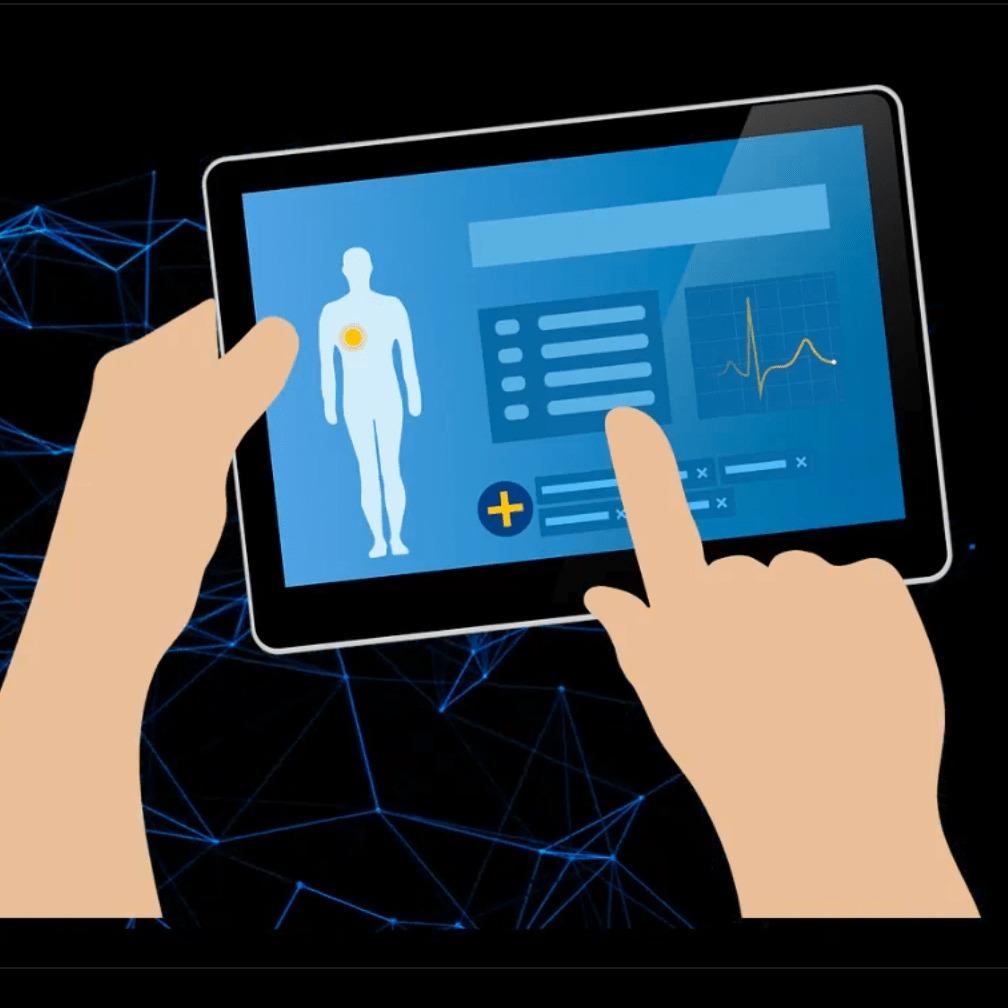
DocMedSync
Ethereum - Blockchain based electronic medical record system that allows providers to securely exchange information with patients and other providers.
Created on 3rd June 2023
•
DocMedSync
Ethereum - Blockchain based electronic medical record system that allows providers to securely exchange information with patients and other providers.


The problem DocMedSync solves
Docmedsync is a decentralized solution for Electronic Medical Records (EMR) sharing systems. It is built on the Ethereum blockchain and leverages the InterPlanetary File System (IPFS) to provide a secure and efficient way of sharing medical records.
One of the major issues traditional EMR systems face is the lack of interoperability. This makes it difficult for healthcare providers to access and share patient information, leading to inefficiencies and potential errors in care. Docmedsync solves this problem by providing a decentralized platform where medical records can be securely stored and easily shared among authorized parties.
The platform utilizes smart contracts to ensure that patient data is tamper-proof and only accessible by authorized parties. The use of the Ethereum blockchain provides a high level of security and immutability, and the IPFS allows for fast and efficient data sharing.
Additionally, Docmedsync allows patients to have full control over their own medical records, enabling them to share their information with healthcare providers as they see fit. This can help to increase patient engagement and empowerment in their own healthcare.
Overall, Docmedsync offers a powerful solution for EMR systems by providing a secure and efficient way of sharing medical records and enabling patients to have more control over their own data. It can help to improve the quality of care and the overall efficiency of the healthcare system.
Challenges I ran into
Building a decentralized solution for EMR sharing systems like DocMedSync can present a number of challenges. One of the main challenges that I ran into was issues with the InterPlanetary File System (IPFS). IPFS is a new technology and is still in the process of being developed and improved, which means that there can be some instability and bugs. I had to spend a lot of time troubleshooting and testing to ensure that the data-sharing functionality on the platform was working correctly.
Another challenge was with the deployment of smart contracts on the Ethereum blockchain. Smart contracts are a crucial component of DocMedSync, as they are used to ensure the security and integrity of patient data. However, deploying smart contracts can be a complex and time-consuming process, and there can be issues with compatibility and scalability. I had to make sure that the smart contracts were thoroughly tested and optimized before deployment to ensure that they were functioning correctly.
Additionally, while building the project, I also faced challenges with the integration of different technology stacks, as the platform required the use of different languages, such as Solidity for smart contract development, JavaScript for front-end development, and web3.js for connecting the blockchain and front-end. It was a challenging task to make sure that all the different components were working together seamlessly and efficiently.
Lastly, I also faced challenges with the scalability of the platform, as the number of users and data being stored on the platform increases, it can put a lot of pressure on the system, and it can be difficult to ensure that the platform can handle the increased load.
Technologies used