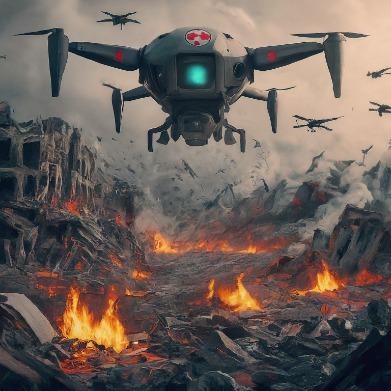
ARES (Aerial Rescue and Emergency System)
ARES: Disaster Strikes. Hope Takes Flight.
Created on 31st March 2024
•
ARES (Aerial Rescue and Emergency System)
ARES: Disaster Strikes. Hope Takes Flight.


The problem ARES (Aerial Rescue and Emergency System) solves
The Problem It Solves
In the aftermath of a disaster, critical minutes are lost searching for injured individuals. Traditional search methods can be slow and dangerous for responders navigating hazardous environments.
How It Helps
This project tackles these challenges by introducing a fleet of autonomous drones equipped with real-time data transmission capabilities.
Faster Search & Rescue: Drones can rapidly deploy to disaster zones, covering large areas in a short time compared to ground search teams.
Enhanced Situational Awareness: Real-time video feeds from the drones provide a bird's-eye view of the situation, helping identify injured people and assess the overall damage.
Improved Responder Safety: By sending drones into potentially hazardous areas, human responders are less exposed to risks.
Data-Driven Decisions: Real-time GPS location data of injured individuals helps direct rescue efforts efficiently.
Overall, this system can significantly improve the speed and effectiveness of disaster response, potentially saving lives.
Challenges I ran into
Challenges Faced
While the concept is promising, there were several hurdles to overcome in developing this drone-based disaster response system:
Object Detection Accuracy: Training an onboard AI model to accurately identify injured people in disaster zones proved difficult. The large variations in lighting, debris, and human posture require a robust dataset specifically for disaster scenarios. This challenge might be addressed by:
Curating a disaster-specific image and video dataset for training.
Exploring transfer learning from pre-trained object detection models and fine-tuning them with disaster data.
Limited Battery Life: Drone flight times are restricted by battery capacity. This becomes crucial in disaster situations where extended operation is necessary. Here are some potential solutions:
Equipping drones with swappable batteries for quick replacement in the field.
Developing charging stations within the disaster zone, strategically placed for drone pit stops.
Weather Dependence: Strong winds, rain, or fog can disrupt drone flight and compromise data transmission. To mitigate this:
Implementing weatherproofing measures on the drones for some level of operation in harsh conditions.
Developing protocols for safe drone operation within different weather limitations.
Data Security & Privacy: Ensuring secure transmission of real-time video feeds and encrypting sensitive information like GPS coordinates is paramount. Security solutions could include:
Employing strong encryption protocols for data transmission.
Limiting access to real-time feeds through secure authentication methods.
Overcoming these challenges will involve ongoing research, development, and collaboration with experts in AI, drone technology, and data security.